Table of Contents
Last Updated: November 10, 2026
Quick Summary
The best aubergine kitchen alternatives for allergy-safe dining are restaurants whose policies exclude your allergens from the whole kitchen, not just from one dish. Daré Vita Café runs a dedicated gluten-free and grain-free kitchen that excludes seed oils, corn, soy, peanuts, and tree nuts. Compare any option on exclusion scope and cross-contact controls before you book.
- A menu labeled gluten-free or vegan does not always mean a meal is safe for a severe allergy.
- Ask which ingredients are excluded from the whole kitchen, which allergens are labeled, and who answers allergy questions.
- Daré Vita Café’s kitchen excludes seed oils, corn, cane sugar, soy, peanuts, and tree nuts.
- Ask whether shared grills, flat-tops, or fryers are used for allergen-containing items.
- Call ahead and confirm current ingredients and cross-contact practices, because websites can be out of date.
Table of Contents
- Why Allergy Diners Look Beyond Aubergine Kitchen
- What Allergy-Friendly Restaurant Policies Actually Promise
- Restaurant Food Allergy Cross-Contact: What Can and Cannot Be Guaranteed
- Allergen-by-Allergen Menu Guidance for Gluten, Grains, Soy, Dairy and Nuts
- Comparing Allergy-Aware Options in Las Vegas
- Planning Allergen-Aware Catering for Large Groups
- Booking Your Next Allergy-Aware Meal at Daré Vita Café
- Frequently Asked Questions
Finding a restaurant you can trust for allergy-aware dining is harder than it should be. Menus say “gluten-free” or “vegan,” yet cross-contact can still happen in a shared kitchen. This guide compares what allergy-friendly dining policies actually promise so you can judge any option, including Aubergine Kitchen, on the same terms.
Why Allergy Diners Look Beyond Aubergine Kitchen
Many diners look for a dependable allergy-friendly restaurant because a menu labeled gluten-free or vegan does not always mean a meal is safe for a severe allergy. Many restaurants state in their policies that they cannot guarantee cross-contact will not occur.
That is not a criticism unique to one restaurant. It is the standard limit of a shared kitchen. The useful question is whether a restaurant excludes your allergens from its core kitchen, not just from a single dish.
What Allergy-Friendly Restaurant Policies Actually Promise
Allergy policies vary widely, so read them closely before you book any allergy-sensitive dining option. Some promise only that certain dishes are free of an ingredient. Others describe a dedicated kitchen or a ban on specific ingredients across the whole menu.
Daré Vita Café’s approach is built around exclusion. Its kitchen is dedicated to gluten-free and grain-free cooking, and it excludes seed oils, corn, cane sugar, soy, peanuts, and tree nuts. Its scratch-made menu labels the top 14 allergens (for example eggs and sesame that are clearly labeled), so you can check a dish before you order. Our approach goes beyond gluten-free dining: from our edible-grass-free formulation, ingredient sourcing, scratch preparation, seed-oil exclusions, and transparent allergen labeling.
Ask any restaurant three questions: Which ingredients are excluded from the whole kitchen? Which allergens are labeled? Who answers allergy questions before you arrive?
Restaurant Food Allergy Cross-Contact: What Can and Cannot Be Guaranteed
Cross-contact occurs when an allergen moves from one food to another through shared surfaces, utensils, oil, or hands. No restaurant can promise zero risk in an open kitchen, so the safest policies reduce exposure rather than claim perfection.
Look for restaurants that describe specific controls, such as separate prep areas, dedicated equipment, and documented cleaning routines. Be cautious of any claim that stops at “we are allergy-friendly.” Ask what that means in the kitchen.
If you have a severe allergy, carry your epinephrine as prescribed and talk with your allergist about dining out. A restaurant can reduce risk, but it cannot replace your own precautions.
Allergen-by-Allergen Menu Guidance for Gluten, Grains, Soy, Dairy and Nuts
A single “allergy-friendly” label hides very different risks. The questions you ask should change with the allergen, because kitchens control some allergens far better than others. Below is a practical, allergen-by-allergen script you can use at any Las Vegas restaurant, including Daré Vita Café, plus the answers that should make you pause.
Gluten and grains. “Gluten-free” on a menu usually means a dish contains no gluten ingredients, not that the kitchen is free of wheat, barley, and rye. Ask whether the kitchen uses any wheat flour at all, whether fryers are shared with breaded items, and whether oats are certified gluten-free.
Soy. Soy hides in sauces, dressings, marinades, cooking oils, and plant-based meat substitutes. Ask whether soy sauce, tamari, edamame, tofu, soy lecithin, or soybean oil appear anywhere in the kitchen. A restaurant that excludes soy from its core ingredients is easier to trust than one that offers a single soy-free dish.
Dairy. Dairy shows up in butter, cheese, cream, yogurt, and baked goods, and “dairy-free” substitutes can still be made on shared equipment. Ask whether dairy-free cheese and plant milks are stored and prepared separately from dairy, and whether the grill or flat-top is shared.
Peanuts and tree nuts. Ask about peanuts and tree nuts separately, because a kitchen may exclude one and not the other. Nut flours, nut milks, pesto, and garnishes are common hidden sources, and shared grinders or food processors can carry residue. Daré Vita Café excludes both peanuts and tree nuts, and it is still worth verifying directly for your specific order.
Shellfish and fish. These are often cooked on shared grills or in shared fryers, and shellfish proteins can aerosolize during cooking. Ask whether shellfish is prepared in the same area and whether fryer oil is shared with fish or shellfish items.
Egg. Egg appears in batters, breads, sauces, and some pasta. Ask whether egg is used in the kitchen at all and whether egg-free dishes are prepared on cleaned surfaces.
Sesame. Sesame is now a recognized major allergen in the United States, and it appears in tahini, hummus, dressings, and breads (the FDA). Ask whether sesame is used in the kitchen and whether it is stored separately.
A common pattern is that restaurants are most reliable on the allergens they have deliberately excluded from the whole kitchen and least reliable on allergens they handle daily for other guests.
Watch out: a menu that labels the top 14 allergens tells you what is in a dish, not what the kitchen handles around it. Always ask the second question, “what else in the kitchen contains this allergen?”, before you order.
If you have a medically significant allergy, carry your epinephrine as prescribed and review your dining plan with your allergist. No menu label replaces your own emergency plan.
The table below summarises the allergens the article discusses and what to check for each one.
|
Allergen |
What to ask |
Why it matters |
|---|---|---|
|
Gluten and grains |
Is any wheat flour used in the kitchen? |
Wheat flour can spread through prep surfaces |
|
Soy |
Are soy sauce, tofu or soybean oil used? |
Soy hides in sauces, dressings and oils |
|
Dairy |
Is shared grill or flat-top used? |
Shared equipment can carry dairy residue |
|
Peanuts and tree nuts |
Are they checked separately? |
A kitchen may exclude one and not the other |
|
Shellfish and fish |
Is fryer oil shared? |
Shellfish proteins can aerosolize during cooking |
|
Egg |
Is egg used anywhere in the kitchen? |
Egg appears in batters, breads and sauces |
|
Sesame |
Is it stored separately? |
Sesame appears in tahini, hummus and dressings |
Comparing Allergy-Aware Options in Las Vegas
The most useful comparison is not “which restaurant says it is allergy-friendly” but “which restaurant’s stated practices match my allergen and my risk level.” Use the framework below to compare Daré Vita Café, Aubergine Kitchen, and any other Las Vegas option on the same terms, then verify the details directly before you go.
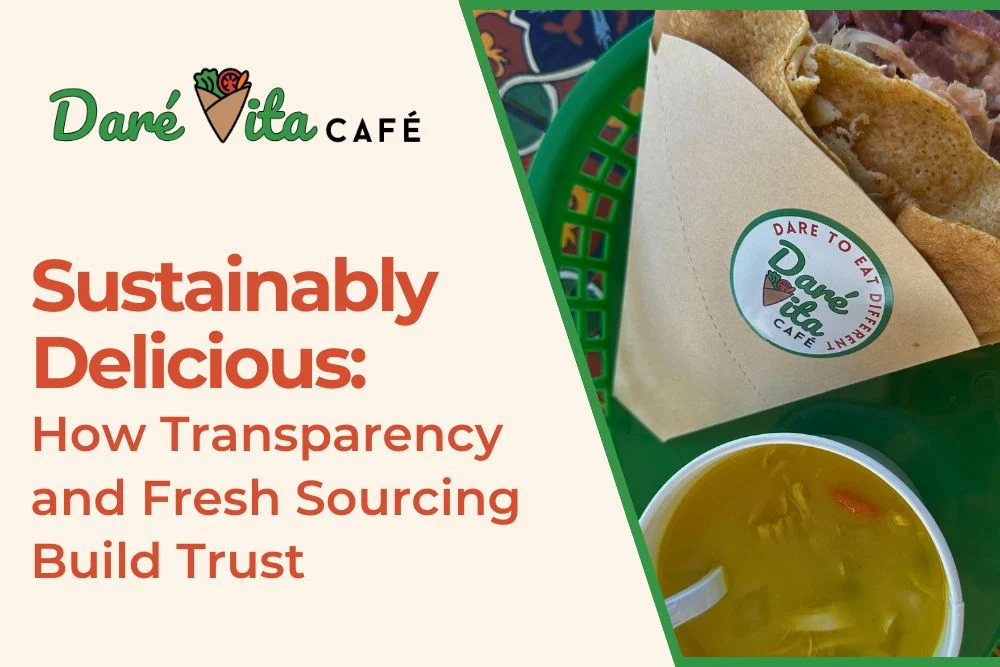
Daré Vita Café in Las Vegas brings together fresh ingredients, scratch-made food, and transparent preparation practices to create a welcoming dining experience for guests with diverse dietary needs.
Step 1: Separate preference from medical risk. If you are avoiding an ingredient by choice, say, dairy for digestion or gluten for a wellness goal, a restaurant that offers a labeled dish is usually enough. If you have a diagnosed allergy, especially one that has caused anaphylaxis, you need to know what the kitchen excludes and how it prevents cross-contact, not just what a dish contains.
Step 2: Compare exclusion scope, not menu labels. Ask each restaurant: which allergens are excluded from the entire kitchen, and which are only absent from certain dishes? Daré Vita Café operates a dedicated gluten-free, grain-free kitchen that excludes all edible grass ingredients, including wheat, barley, rye, oats, corn, rice, sorghum, millet, and teff. Our kitchen also excludes cane sugar, soy, peanuts, tree nuts, and seed oils. Unlike restaurants that simply offer gluten-free selections alongside conventional menu items, our ingredient standards are built into the entire kitchen operation. Many restaurants, including some competitors, state that they cannot guarantee cross-contact will not occur. Choose based on which level of control fits your allergen.
Step 3: Check allergen labeling. Ask whether the menu labels the top 14 allergens and whether the labels are updated when recipes change. A labeled menu saves time, but confirm the label with staff for your specific order.
Step 4: Ask who answers allergy questions. The best time to ask is before you arrive, by phone or through the restaurant’s website, when staff are not in the middle of a lunch rush. Ask whether a manager or chef can confirm ingredients and preparation for your order.
Step 5: Confirm location, hours, and ordering method. Hours and service styles change, especially for independent restaurants, so check the restaurant’s own website for current hours, address, and whether walk-in, pickup, or delivery is available. Confirm current hours and location on Daré Vita Café’s website before you travel.
Step 6: Plan for the day, not just the meal. If you are visiting from out of town, build in time to call ahead, avoid peak hours when staff are rushed, and carry your own safe snacks as a backup. A restaurant that reduces risk is not the same as a restaurant that eliminates it.
Daré Vita Café takes a whole-kitchen approach to ingredient exclusions rather than relying solely on individual menu modifications. Our dedicated gluten-free and grain-free kitchen, clearly labeled top 14 allergens, and commitment to transparent ingredient information help guests make more informed dining decisions. We encourage guests with food allergies to discuss their individual needs with our team before ordering.
Watch out: a restaurant’s website can be out of date. Confirm current ingredients, hours, and cross-contact practices by phone before you rely on any online statement, and ask again when you arrive.
Planning Allergen-Aware Catering for Large Groups
Catering for a mixed group is more complicated than ordering for one diner. Plan early, share every allergy with the caterer, and ask how each item is prepared and transported.
Pricing for catering depends on quantity, dates, and delivery, so request a written quote for your specific headcount. Confirm lead times in advance, especially for a group of 50 or more with mixed dietary needs. Ask whether the caterer can label each dish and keep allergen-free items separate during transport.
For current catering options and availability, contact Daré Vita Café directly through its website.
Booking Your Next Allergy-Aware Meal at Daré Vita Café
If you want a dedicated allergen-friendly kitchen in Las Vegas, Daré Vita Café is worth a visit. The restaurant offers a gluten-free and grain-free menu, and it labels its dishes so you can plan your order with confidence.
Check the allergy policies and food safety approach before you come in, and read more about how Daré Vita Café handles cross-contact. For the full picture of what makes the kitchen allergen-friendly, review the ingredient information on the site. Then order a meal you can enjoy without second-guessing every bite.
Frequently Asked Questions
What should I ask a restaurant about food allergies before ordering?
Ask which of your allergens are handled in a dedicated space or with separate equipment, whether staff have received allergen training, and how they prevent cross-contact during preparation and plating. Ask whether ingredients or sauces change without notice and whether the kitchen can confirm a specific dish against your allergy list before you arrive. Ask to speak with a manager if you have a severe allergy. Write down the answers so you can compare restaurants and check again on your next visit.
Can a restaurant guarantee that a meal is free from cross-contact?
Usually not. Many restaurants, including ones that offer gluten-free or vegan items, state in their allergy policies that they cannot guarantee a meal is completely free of allergens or that cross-contact will not occur. Allergen-free kitchens reduce risk, but shared fryers, prep surfaces and staff handling can still introduce trace amounts. Treat a restaurant’s policy as a starting point and confirm the details with staff before ordering.
What should I look for in allergy-friendly catering for a large group?
Look for a caterer that asks for your guests’ specific allergies in advance, labels every dish, and can explain how it separates ingredients and equipment. Confirm the menu covers the allergens your group needs to avoid, such as gluten, grains, soy, dairy, peanuts and tree nuts. Ask for a written allergen sheet, a named contact for event day, and a clear lead time. Pricing depends on guest count, dates and delivery, so request a quote directly from the business.
Is Aubergine Kitchen suitable for people with food allergies?
Restaurants often state that they cannot guarantee cross-contact will not occur. A person with a severe allergy should read any restaurant’s allergy policy in full, ask staff about specific dishes, and decide whether the risk is acceptable for them. Check current menus and policies directly with each restaurant.