
Table of Contents
Last Updated: November 8, 2026
Quick Summary
Gluten-free baking substitutes rarely work one-for-one, because each flour absorbs liquid and builds structure differently. Rice flour blends suit cookies, oat flour suits muffins, almond flour suits cakes, and tapioca or potato starch suit thickening sauces. Pairing flours with a binder such as xanthan gum usually gives the best results.
- Use about 1 teaspoon of xanthan gum per cup of flour blend as a starting point.
- Use only about a quarter as much coconut flour as wheat flour, then add extra eggs or liquid.
- Mix tapioca or potato starch with cold water before adding it to hot sauces.
- Let gluten-free batter rest 10 to 15 minutes so the flours fully hydrate.
- Change only one variable per bake and write down what you adjusted.
Table of Contents
- Why Gluten-Free Baking Substitutes Don’t Work One-for-One
- Gluten-Free Flour Substitute Chart for Common Swaps
- Gluten-Free Grains and Flours List: Properties and Best Uses
- Gluten-Free Flour Substitute for Baking Cakes, Cookies, and Bread
- Gluten-Free Alternative to Flour for Thickening Sauces and Gravies
- Troubleshooting Dry, Crumbly, or Gummy Gluten-Free Bakes
- Booking a Dedicated Allergen-Free Meal or Catering Order at Daré Vita Café
- Frequently Asked Questions
Gluten-free baking substitutes for home cooks can feel like guesswork, and that is because most swaps are not one-for-one. A cup of rice flour does not act like a cup of wheat flour, so a simple swap often leaves a cake dense, a cookie gritty or a loaf crumbly. The choice of flour changes the result more than most home cooks expect. This guide walks through the substitutes that work, what each one does, and how to fix the bakes that go wrong.
Gluten is the protein that gives wheat dough its stretch and structure. Without it, you need other ingredients to hold things together. Most home cooks reach for a single flour, see a poor result, and assume the recipe failed. Usually the problem is the flour choice, not the cook.
Why Gluten-Free Baking Substitutes Don’t Work One-for-One
Swapping one gluten-free flour for wheat rarely works, and the reason is structure. Gluten-free flours differ in how they absorb liquid, how they brown and how they hold air. Single gluten-free flours rarely replace wheat flour across recipes, so blends or extra ingredients are usually the better route.
A common mistake is treating all gluten-free flours as interchangeable. Coconut flour, for example, soaks up far more liquid than rice flour, so using the same amount in both will ruin a batter.
Gluten-Free Flour Substitute Chart for Common Swaps
Use this chart as a starting point. Results vary by recipe, so adjust liquid as you go.
| Wheat Flour Use | Gluten-Free Substitute | Best For | Watch Out For |
|---|---|---|---|
| All-purpose flour in cookies | Rice flour blend | Crisp, light cookies | Can taste gritty alone |
| All-purpose flour in muffins | Oat flour | Soft, moist crumb | Can turn gummy if overmixed |
| All-purpose flour in cakes | Almond flour blend | Tender, rich cakes | Browns quickly |
| Flour for thickening sauces | Tapioca starch | Glossy, clear sauces | Turns stringy if overheated |
| Flour for thickening gravy | Potato starch | Quick thickening | Add it late, off heat |
| Bread flour in yeast bread | Sorghum or teff blend with binder | Sturdier loaves | Needs a binder like xanthan gum |
Coconut flour can replace some wheat flour in recipes, but use only about a quarter as much, then add extra eggs or liquid.
Gluten-Free Grains and Flours List: Properties and Best Uses
Each flour brings something different to the bowl, and the differences are mechanical, not just flavor. The two things that matter most are how much liquid a flour absorbs and whether it contributes structure (protein and fiber) or just bulk (starch). Once you know where a flour sits on those two axes, you can predict what it will do to a batter before you bake it.
Whole-grain and structure flours
- Brown rice flour: Neutral flavor, moderate absorption, and a slightly sandy grind. It is the workhorse base for blends because it does not fight other flavors. It browns slowly and can taste gritty if the batter is not rested. Use it as 40 to 60 percent of a blend.
- White rice flour: Finer and milder than brown rice, with less fiber and less structure. Good for tender cakes and cookies, but it needs a starch partner or the crumb turns chalky.
- Sorghum flour: Mild, slightly sweet, and soft-textured. It behaves closer to wheat flour than most gluten-free grains, which makes it a strong choice for cakes, muffins, and quick breads. It can go dry if you push it past about half the blend.
- Buckwheat flour: Earthy and assertive. It absorbs liquid readily and adds a dense, rustic crumb. Best in pancakes, waffles, and hearty breads where its flavor is an asset, not a distraction.
- Millet flour: Light, slightly sweet, and fine. It works well in cookies and flatbreads but contributes little structure on its own, so pair it with a binder.
- Teff flour: Deep, nutty, and high in fiber. It holds moisture well and gives brownies and sandwich bread a whole-wheat-like depth. Its color darkens light crumb, so use it where that is acceptable.
- Oat flour: Soft and mild, with good moisture retention. It makes muffins and cookies tender but turns gummy if overmixed. Use certified gluten-free oats if cross-contact is a concern.
- Chickpea flour: High protein and savory. It adds structure and a distinct bean flavor, so keep it to small amounts in sweet bakes and lean on it for flatbreads and fritters.
- Almond flour: Rich, moist, and high in fat. It browns fast and makes cakes tender, but it is heavy, so it needs eggs or a binder to lift. It is not a cup-for-cup swap for grain flour.
- Coconut flour: Extremely absorbent. It can soak up several times its volume in liquid compared with rice flour, so it is never a one-for-one swap. Use it in small amounts with extra eggs and liquid.
Starches are not flours in the structure sense. Tapioca starch, potato starch, and cornstarch add lightness and chew but no protein. They are the other half of most blends, usually at 30 to 40 percent.
Binders are the third category. Xanthan gum, guar gum, psyllium husk, and ground flax or chia stand in for gluten’s elastic network. Xanthan is the most common in home blends at about one teaspoon per cup of flour blend; psyllium adds a more bread-like chew and is often used in yeast loaves.
Watch out: nut and seed flours add fat and density, so a blend built mostly on almond or coconut flour will brown and set differently from a grain-based blend even when the weights match.
Gluten-Free Flour Substitute for Baking Cakes, Cookies, and Bread
Most ranking guides tell you which flour suits which baked good. Fewer tell you how much to swap and what to do when the result goes wrong. This section does both, using ratios you can apply to a recipe you already have.
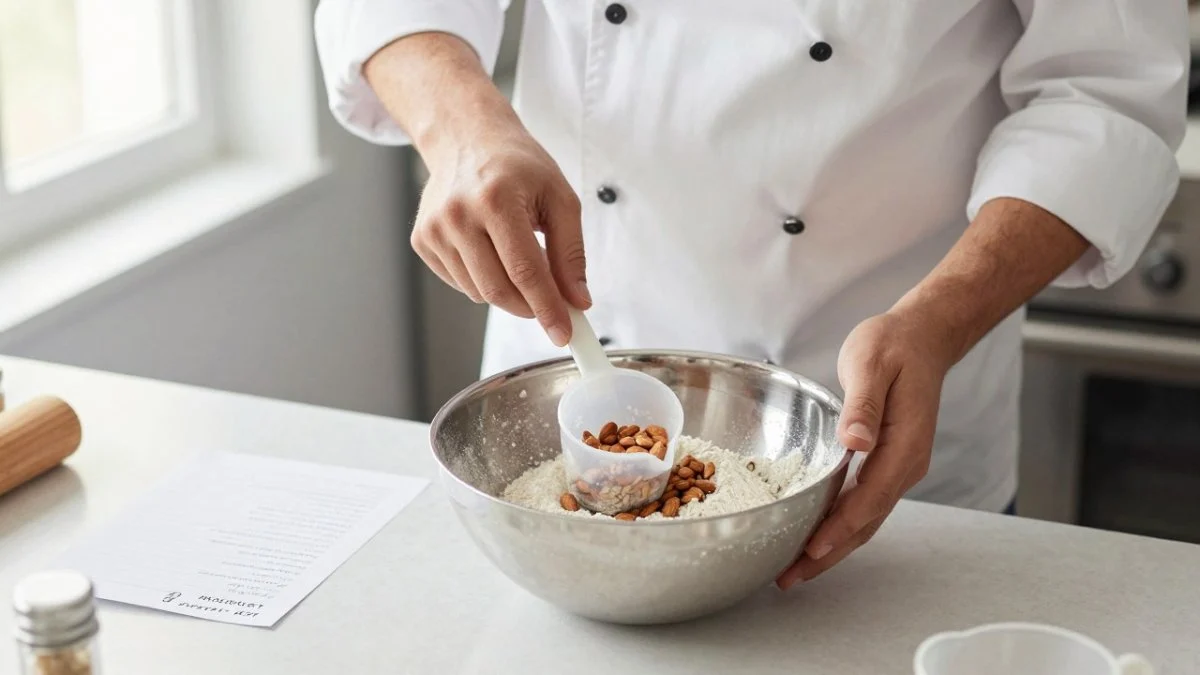
Start with a conversion ratio, not a guess.
A common starting point for replacing wheat flour with a gluten-free all-purpose blend is 1 cup of wheat flour to about 1 cup of blend plus roughly 1 teaspoon of xanthan gum per cup, then adjust liquid. Single flours are less forgiving: almond flour is typically used at about 1 cup almond flour to 1 cup wheat flour only in recipes designed for it, and coconut flour is usually used at about 1/4 cup coconut flour per 1 cup wheat flour with extra eggs and liquid. Treat these as starting ratios, not guarantees, and note what you changed.
Cakes. Cakes need softness and lift. A blend of about 60 percent sorghum or brown rice flour and 40 percent starch, with xanthan gum at 1 teaspoon per cup, gives a tender crumb. Add an extra egg white or a tablespoon of yogurt for moisture. Bake at the recipe temperature but check 5 to 8 minutes early, because gluten-free cakes set and brown faster.
Cookies. Cookies need spread and chew. Rice flour blends work, but they spread less than wheat, so flatten dough slightly before baking and add a tablespoon of liquid or an extra egg yolk per batch. Chilling the dough 30 minutes helps the flour hydrate and reduces grittiness.
Bread. Bread needs structure, which means a binder and a flour with body. A teff or sorghum base with psyllium husk (about 1 to 2 tablespoons per loaf, hydrated in water) gives a more bread-like chew than xanthan alone. Let the batter rest 10 to 15 minutes before baking so the flours absorb liquid, and expect a shorter rise than wheat dough.
Troubleshoot by symptom, not by ingredient.
- Crumbly cookies or muffins: too little binder or too much starch. Add 1/4 teaspoon more xanthan per cup of blend, or swap 2 tablespoons of starch for a whole-grain flour.
- Gummy center: too much binder or underbaking. Cut xanthan back to 3/4 teaspoon per cup and bake until a skewer comes out clean, not just moist.
- Dense cake: not enough leavening or overmixing. Mix just until combined and make sure baking powder is fresh.
- Dry bread: too much absorbent flour or too little liquid. Add liquid a tablespoon at a time and rest the dough before baking.
- Gritty texture: rice flour that has not fully hydrated. Rest the batter 10 to 15 minutes before baking.
Watch out: changing more than one variable at a time makes it impossible to know which fix worked, so change one thing per bake and write it down.
Gluten-Free Alternative to Flour for Thickening Sauces and Gravies
For thickening, starches beat flour. Tapioca starch gives a glossy finish, while potato starch thickens quickly. Mix the starch with cold water to form a slurry before adding it to hot liquid. Stir in the slurry near the end of cooking, because overheating can make sauces thin or stringy.
Troubleshooting Dry, Crumbly, or Gummy Gluten-Free Bakes
Most problems come down to a few causes:
- Dry or crumbly: Too little liquid or too much flour. Add a spoon of liquid at a time.
- Gummy: Too much binder or underbaking. Lower the xanthan gum and bake a few minutes longer.
- Dense: Not enough leavening or overmixing. Mix just until combined.
- Gritty: Rice flour that was not fully hydrated. Let batter rest longer.
Keep a notebook of what you change. Small adjustments add up fast.
Booking a Dedicated Allergen-Free Meal or Catering Order at Daré Vita Café
If baking at home feels like too much work, Daré Vita Café prepares scratch-made meals free from gluten, grains, soy, peanuts, tree nuts and refined sugars. You can browse our gluten-free menu before you visit, or read about the ingredients we use in every dish.
For a dedicated allergen-free meal or a group order, contact Daré Vita Café for hours, directions and phone details. Pricing depends on quantity, dates and delivery, so ask us for a current quote. Takeout is also available, and you can order ahead for pickup to enjoy allergen-friendly food wherever you are.
Watch out: cross-contact is the biggest risk for guests with celiac disease. Ask any kitchen how it prevents shared surfaces and utensils from touching gluten-containing foods.
Baking gluten-free is a skill you build with practice, and the right substitute makes it much easier. Start with a blend, adjust one thing at a time, and keep notes. When you want a meal that is safe and ready to enjoy, Daré Vita Café is here for you.
Frequently Asked Questions
What are some good gluten-free alternatives for baking?
Common gluten-free baking flours include brown rice flour, sorghum, millet, buckwheat, oat flour (certified gluten-free), almond flour, and coconut flour. Each behaves differently: almond and coconut flours add moisture and richness but absorb liquid differently, while sorghum and brown rice flours offer a more neutral base. Most home bakers get the best texture by combining two or three flours with a starch such as tapioca or potato starch, then adding a binder like xanthan gum or psyllium husk for structure.
Can I substitute gluten-free flour for all-purpose flour in any recipe?
Not reliably. A single gluten-free flour rarely works as a direct one-for-one replacement for wheat flour, and no single flour suits every purpose. Gluten-free blends usually need added binders and sometimes extra liquid, and cakes, cookies, and bread each respond differently. Start with recipes written for gluten-free flour or a tested all-purpose blend, and expect to adjust baking time and moisture on your first attempt.
How do I keep gluten-free baked goods from becoming dry or crumbly?
Adding a binder such as xanthan gum or psyllium husk can help give structure. Increasing moisture and avoiding overbaking also help. Let bakes cool fully in the pan before cutting, since gluten-free crumb sets as it cools.
Which gluten-free flour is best for cakes, cookies, and bread?
Cakes, cookies, and bread each respond differently to flour choice, and recipes written for gluten-free baking are the best starting point. Almond and coconut flours are useful in grain-free baking but are not interchangeable with grain flours. Because nut and coconut flours carry allergen concerns, check labels and cross-contact warnings carefully before buying.