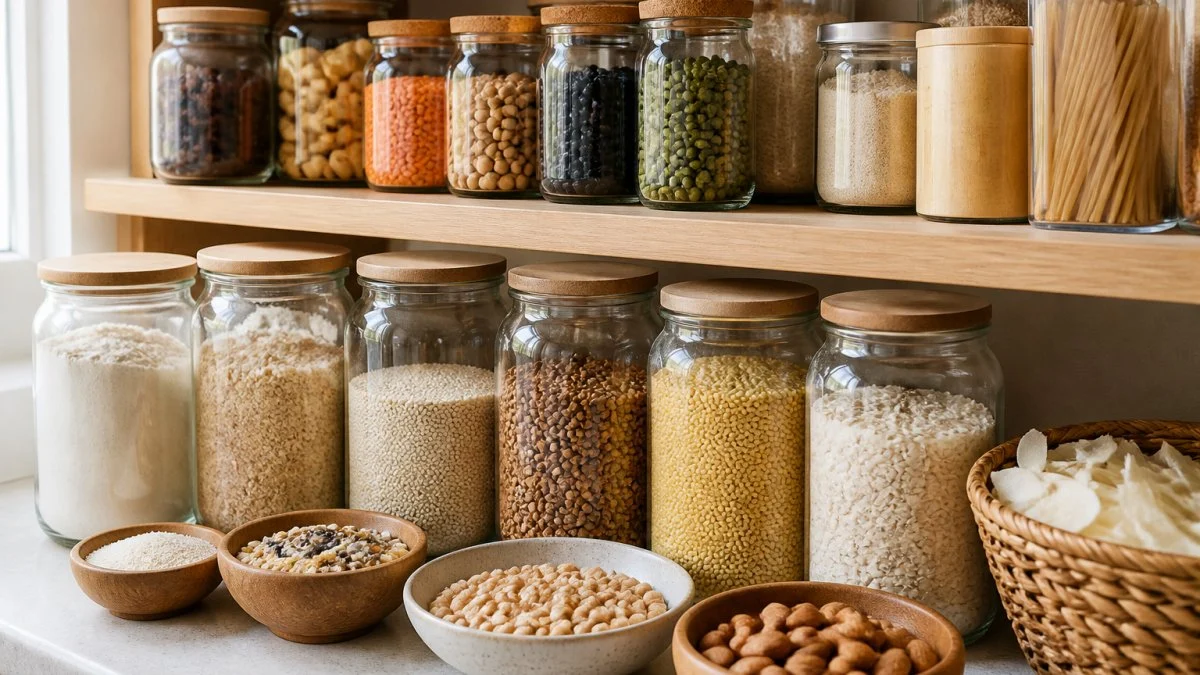
Table of Contents
Last Updated: October 26, 2026
Quick Summary
Gluten-free pantry staples form the foundation of safe, nourishing meals for people with celiac disease or gluten sensitivity. Read labels for the gluten-free certification mark, and prevent cross-contact through dedicated equipment and proper cleaning protocols.
- The FDA defines gluten-free as containing less than 20 parts per million of gluten, the federal standard for labeling. So gluten-free does not necessarily mean free of gluten.
- The global gluten-free products market was valued at $8.5 billion in 2025 and is projected to reach $9.3 billion in 2026.
- Buying grain-free options for everyday meals and reserve specialty flours for recipes where they’re essential.
- Cross-contact prevention requires three layers: dedicated equipment, cleaning protocols, and staff training.
- Look for the gluten-free certification mark on labels as your strongest signal of safety.
Table of Contents
- Why Your Gluten-Free Pantry Staples Matter
- Understanding the FDA Gluten-Free Standard
- Building a Practical Gluten-Free Grocery List
- Essential Gluten-Free Flours for Daily Cooking
- Reading Labels for True Gluten-Free Assurance
- Cross-Contact Prevention in a Gluten-Free Kitchen
- Stock Your Kitchen With Confidence
- Frequently Asked Questions
Why Your Gluten-Free Pantry Staples Matter
Building a gluten-free pantry isn’t just about removing one ingredient, it’s about creating a foundation for meals that nourish your body and keep you safe. If you have celiac disease, a severe gluten sensitivity, or are raising children with multiple food allergies, stocking the right gluten-free pantry staples transforms how you eat and how you feel.
The stakes are real. Cross-contact during food preparation can trigger autoimmune flare-ups that sideline you for days. Yet with the right staples on hand, you gain control over what goes into every meal. At Daré Vita Café in Las Vegas, we’ve spent years refining which ingredients deliver both safety and nutrition. This guide walks you through the essentials, from understanding FDA standards to preventing cross-contamination in your own kitchen.
Understanding the FDA Gluten-Free Standard
The FDA defines a food labeled “gluten-free” as containing less than 20 parts per million (ppm) of gluten, the federal standard for gluten-free labeling established to protect people with celiac disease. This threshold matters because it’s the legal baseline, but it’s not a safety guarantee for everyone.
Here’s what that means practically: a product can carry the “gluten-free” label and still contain trace amounts of gluten. For some people, especially those newly diagnosed, 20 ppm is tolerable. For others with severe sensitivities, even that level triggers a reaction. The standard protects most of the population but not all.
When you’re selecting gluten-free pantry staples for your kitchen, the FDA label is your starting point, not your finish line. Read it as permission to consider the product, then dig deeper into how it was made.
Building a Practical Gluten-Free Grocery List
Start with a clear strategy: divide your pantry into categories based on how you actually cook. Most households need five core groups: flours, proteins, fats and oils, seasonings, and shelf-stable produce.
The global gluten-free products market was valued at $8.5 billion in 2025 and is projected to reach $9.3 billion in 2026, according to Grand View Research market analysis. That growth reflects real demand, and real variety on shelves. More options mean better chances of finding products that fit your specific needs, whether you’re avoiding grains entirely or just gluten.
Build your list around these questions:
- What meals do you cook most often?
- Which allergens affect your household?
- Do you prefer grain-free options or are traditional gluten-free grains acceptable?
- What’s your budget for specialty items?
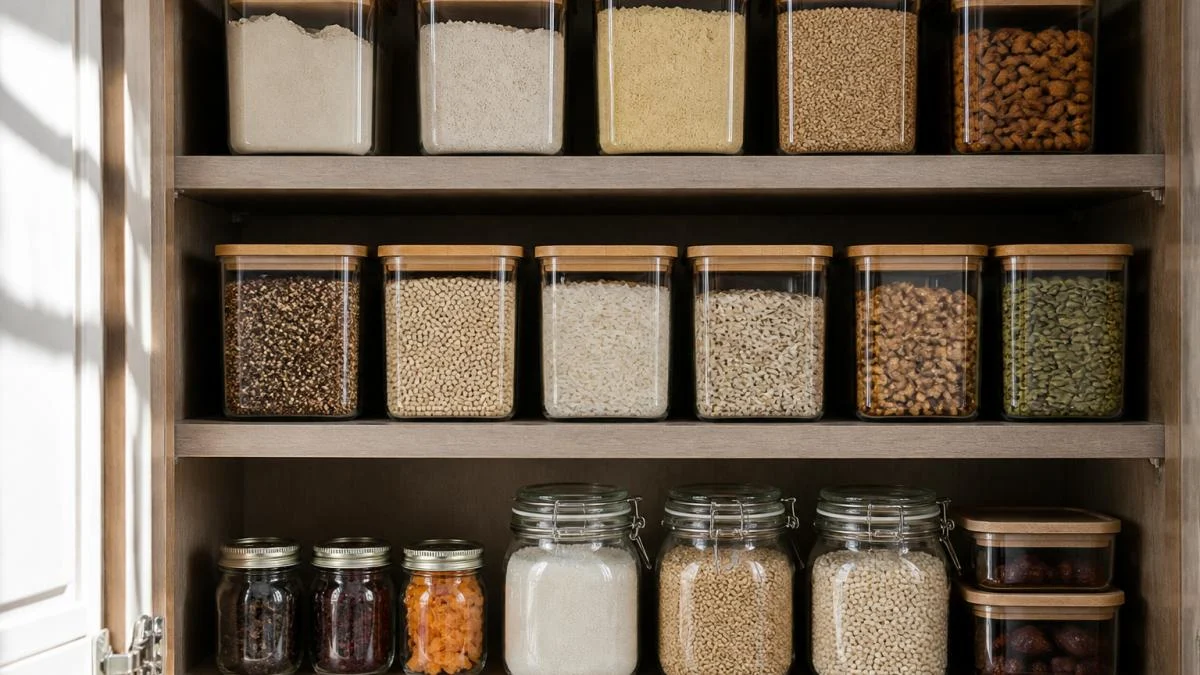
Organized glass containers filled with gluten-free pantry staples arranged neatly on a sunlit wooden shelf. If you have nuts and flax, put these ingredients in the freezer to protect against them molding.
Most people overstock at first, buying every option they see. Instead, buy three staples you’ll use weekly, master them, then expand. Rotation prevents waste and keeps your pantry fresh.
Essential Gluten-Free Flours for Daily Cooking
The term gluten-free grains and flours covers two distinct categories: naturally gluten-free (quinoa) and specialty flours ground from gluten-free sources (almond flour, coconut flour, tapioca starch).
Naturally grain-free ingredients are your safest bet for bulk cooking. Quinoa has no gluten in its structure as it is a pseudo-grain, not from the edible grass family. When you buy this, choose brands that explicitly state “gluten-free certified” on the package. That certification means the facility tested for cross-contact.
Specialty flours demand more caution. Many are processed in shared facilities with wheat. Almond flour, coconut flour, and tapioca starch are all naturally gluten-free, but research from the Celiac Disease Foundation tested 98 samples of naturally gluten-free foods prepared in shared fryers, revealing that preparation method matters as much as the ingredient itself. Shared equipment, especially fryers and mixers, can introduce gluten even when the base ingredient is clean.
Your practical strategy:
- Buy certified grain-free for everyday meals
- Reserve specialty flours for recipes where they’re essential
- Check the label for “gluten-free certified” rather than just “naturally gluten-free”
- When dining out or ordering catering, ask whether items were prepared in dedicated equipment
Learn how Daré Vita Café sources and prepares gluten-free ingredients to understand what true ingredient commitment looks like.
Reading Labels for True Gluten-Free Assurance
Label reading separates safe choices from risky ones. The FDA label tells you the manufacturer’s claim, but it doesn’t tell you the full story.
Start here: look for the “Gluten-Free” certification mark. This mark means the product was tested and verified to contain less than 20 ppm. It’s your strongest signal of safety.
Next, scan the ingredient list for hidden gluten sources. Malt flavoring, barley extract, and wheat starch all contain gluten. So do many soy sauces, Worcestershire sauces, and thickening agents. These aren’t always obvious from the product name.
Then check the allergen statement. Federal law requires manufacturers to disclose the top 14 allergens, including wheat. If wheat appears in the allergen line, the product isn’t gluten-free. If it says “may contain wheat” or “processed in a facility with wheat,” you need to decide your personal risk tolerance.
The real gap in labeling: cross-contact during preparation. A product can be gluten-free in ingredients but unsafe in execution. This is where learning about Daré Vita Café’s allergen labeling practices gives you a model for what transparency looks like in practice.
Cross-Contact Prevention in a Gluten-Free Kitchen
Cross-contact, the accidental transfer of gluten to gluten-free food, causes more problems than most people realize. It’s not about carelessness. It’s about understanding how gluten travels.
Gluten particles are tiny and sticky. They cling to cutting boards, knives, toasters, and shared condiment containers. A crumb from regular bread left on a butter knife contaminates the next person’s plate. Flour dust from baking wheat bread settles on nearby surfaces and lingers for hours.
Preventing it requires three layers:
- Dedicated equipment: Use separate cutting boards, toasters, and colanders for gluten-free foods. Mark them clearly.
- Cleaning protocols: Wash shared surfaces with hot soapy water before preparing gluten-free meals. Don’t assume “clean enough” is actually clean.
- Staff training: If you’re feeding others, everyone in the kitchen must understand cross-contact. One person’s casual approach undermines everyone’s safety.
Explore Daré Vita Café’s cross-contamination prevention methods to see how our zero gluten professional kitchen maintains these standards at scale. Their approach, dedicated equipment, strict cleaning, and thorough training, is the model to follow in your own home.
|
Prevention Layer |
Action |
Impact |
|---|---|---|
|
Dedicated Equipment |
Separate cutting boards, toasters, colanders |
Eliminates shared-tool contamination |
|
Cleaning Protocol |
Hot soapy water before each use |
Removes residual gluten particles |
|
Staff Training |
Everyone understands cross-contact risks |
Prevents casual mistakes |
|
Condiment Management |
Dedicated spreads and sauces |
Stops knife-to-jar contamination |
Stock Your Kitchen With Confidence
You now have the framework to build a safe, practical gluten-free pantry. Read labels carefully, and prevent cross-contact at every step.
The final piece is knowing when to step back from home cooking. Not every meal needs to come from your pantry. Ready-made gluten-free options from trusted sources save time and mental energy. Explore Daré Vita Café’s gluten-free menu to see what nutrient-dense, scratch-made meals look like when they’re prepared by someone who understands both safety and flavor.
Frequently Asked Questions
What are the best gluten-free pantry staples for everyday cooking?
Quinoa, tapioca, cassava and coconut flour. Add proteins such as canned fish, legumes, and nuts (if tolerated). Include oils like olive and avocado, vinegars, and herbs. The FDA defines gluten-free foods as containing less than 20 parts per million (ppm) of gluten, so always verify labels.
How do I build a gluten-free grocery list that covers all my meals?
Start with proteins (eggs, legumes, quality meats), then add your grain-free ingredients and flours, fresh produce, and healthy fats. Include shelf-stable items like canned tomatoes, coconut milk, and bone broth. Plan breakfasts around eggs, healthy fats, and proteins, lunches plant- based bases, and dinners with roasted vegetables and protein. Keep versatile staples on hand: olive oil, sea salt, herbs, and vinegar. Write your list by meal type to ensure balanced nutrition and reduce impulse purchases of processed foods.
How can I prevent cross-contact in a gluten-free kitchen?
Use separate cutting boards, toasters, and utensils for gluten-free foods. Store gluten-free items on higher shelves to prevent crumbs from falling onto them. Wash hands and surfaces thoroughly after handling conventional bread or pasta. If sharing a kitchen, designate gluten-free zones and use separate condiment jars to avoid double-dipping. Clean your oven and stovetop regularly since flour particles can linger. Daré Vita Café maintains a dedicated 100% gluten-free and grain-free kitchen to prevent cross-contact, a standard you can replicate at home.
What should I look for when reading gluten-free labels on packaged foods?
Look for the FDA gluten-free certification label, which guarantees the product contains less than 20 ppm of gluten. Check the ingredient list for hidden sources of gluten like modified food starch, soy sauce, or malt flavoring. Review the ‘May Contain’ or ‘Processed in a facility’ statements to assess cross-contact risk. Compare nutrition panels to ensure adequate fiber and protein. Avoid products listing wheat, barley, or rye. When in doubt, contact the manufacturer. Daré Vita Café clearly labels all top 14 allergens, so you know exactly what you’re eating.
Building a gluten-free pantry takes intention, but it pays off in meals you can eat without fear. Whether you’re managing celiac disease, severe allergies, or raising a family with multiple dietary needs, the right staples give you control. Daré Vita Café in Las Vegas specializes in scratch-made, gluten-free, grain-free meals prepared in a dedicated kitchen with strict cross-contact prevention. Order online or visit to experience meals designed for your safety and health.