Table of Contents
Last Updated: October 31, 2026
Quick Summary
Hidden soy turns up in sauces, marinades, dressings, cooking oils, broths and batters, often in dishes that do not taste like soy. Read each dish as a list of parts, including protein, sauce, cooking fat and sides, and ask the restaurant specifically before you order.
- Check marinades, sauces and dressings, since soy often hides there.
- Ask whether soybean oil is used for frying and whether the fryer is shared.
- Watch for words like savory, glazed, Asian-style and house sauce.
- Ask whether the kitchen can make the dish without its marinade or sauce.
- Treat a menu’s silence about soy as a question to ask, not a guarantee.
Table of Contents
- Why Soy Hides on Restaurant Menus
- Hidden Soy Ingredients in Restaurant Food to Check For
- Reading a Menu Line by Line
- How to Ask Restaurants About Food Allergies
- Soy Allergy Dining Out: Questions to Ask Before You Order
- Finding Soy-Free Restaurants in Las Vegas
- Booking Your Next Soy-Safe Meal at Daré Vita Café
- Frequently Asked Questions
Why Soy Hides on Restaurant Menus
Hidden soy shows up in more restaurant food than most diners expect. Kitchens use it as a cheap thickener, a flavor base, and an emulsifier, so it often appears in dishes that don’t taste like soy at all. For someone with a soy allergy, that makes a menu’s silence a poor guide to safety.
Restaurant menus also tend to be short. A line like “grilled chicken with herb sauce” doesn’t list the marinade, the oil, or the stock underneath. That gap is where soy hides.
Keep in mind that a menu or allergen label alone may not establish that a dish is safe. The FDA’s menu-labeling guidance focuses on calorie disclosure, so a restaurant’s silence about soy shouldn’t be read as confirmation that a dish is soy-free. Treat every unclear item as a question to ask.
Hidden Soy Ingredients in Restaurant Food to Check For
Soy hides under many names. Learn to spot them before you order.
Sauces, Marinades and Dressings
Many sauces rely on soy for savory depth. Watch for:
- Soy sauce, tamari, and shoyu
- Teriyaki, hoisin, and oyster sauce
- Miso and edamame paste
- Vegetable protein or “hydrolyzed vegetable protein”
- Some Caesar and Thai-style dressings
A marinade can carry soy even when the finished dish looks plain. Ask what the protein was marinated in.
Oils, Broths and Fried Foods
Soy also turns up in the fat and liquid used to cook food:
- Soybean oil, a common frying and salad oil
- Vegetable oil blends that list soy among their sources
- Stocks and broths thickened or flavored with soy
- Fried foods coated in batter or breading that contains soy flour
- Tempura and some tempura-style coatings
Fried items are a common blind spot. Shared fryers can also carry soy from other foods, so ask about that too.
Reading a Menu Line by Line
Read each dish as a list of parts, not a single name. Break it down:
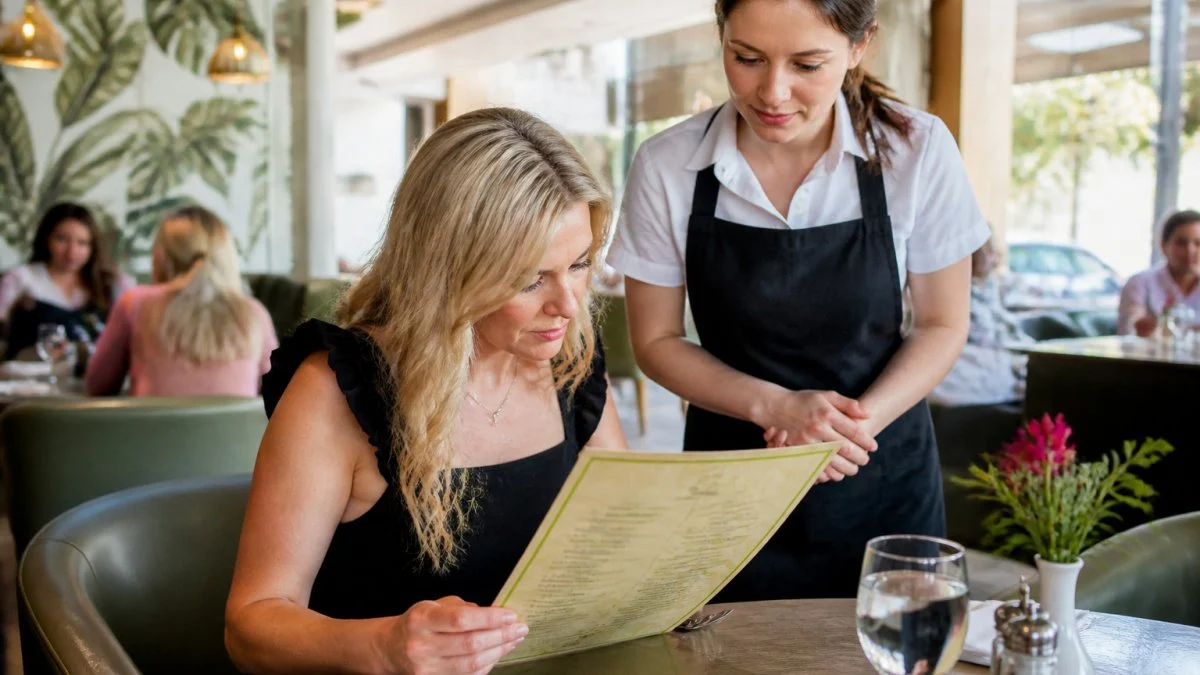
- Protein: Was it marinated, brined, or breaded?
- Sauce: Is it finished with a glaze, dressing, or dipping sauce?
- Cooking fat: Was it fried or sautéed in soybean or blended oil?
- Sides: Do rice, noodles, or vegetables come with a sauce?
Words like “savory,” “glazed,” “Asian-style,” and “house sauce” are signals to ask more questions. Those words usually mean a sauce you can’t see.
Breaking each dish into its parts makes it easier to spot where soy might be hiding.
| Dish part | What to ask | Why it matters |
|---|---|---|
| Protein | Was it marinated, brined, or breaded? | Marinades often carry soy |
| Sauce | Is it finished with a glaze, dressing, or dip? | Sauces often rely on soy for flavor |
| Cooking fat | Was it fried or sautéed in soybean or blended oil? | Soybean oil is a common cooking fat |
| Sides | Do rice, noodles, or vegetables come with a sauce? | Sides can hide soy in the dressing |
How to Ask Restaurants About Food Allergies
Most staff want to help. Asking clear, specific questions gets you better answers.
- Does this dish contain soy in any form, including sauce, oil, or seasoning?
- Is soy oil used for frying, and is the fryer shared?
- Can the kitchen make this without the marinade or sauce?
- Can you check the ingredient list for this item?
Ask before you order, not after the food arrives. Our FAQ on safe ordering walks through which questions to ask before you choose a dish. If the server isn’t sure, ask them to check with the kitchen. A good restaurant will do that rather than guess.
Soy Allergy Dining Out: Questions to Ask Before You Order
Here are more questions to bring to the table:
- Which dishes can be prepared without soy?
- Do you cook with a separate, soy-free fryer or pan?
- Is the bread, batter, or breading soy-free?
- Do any “vegan” or “dairy-free” items contain soy?
Restaurants with a clear answer to every question are usually the safer choice. Daré Vita Café’s FAQs explain how our menu and kitchen handle allergens. Vague answers are a sign to order something simpler or go elsewhere.
Finding Soy-Free Restaurants in Las Vegas
Some places are easier than others. Look for restaurants that build their menu around specific dietary needs, use scratch cooking, and label allergens clearly. Those features mean the kitchen already tracks what goes into each dish.
Chain restaurants often publish full ingredient information online. Check it before you visit, since recipes change.
Booking Your Next Soy-Safe Meal at Daré Vita Café
Daré Vita Café is built around avoiding common allergens. Our menu is free from gluten, grains, soy, peanuts, tree nuts, and refined sugars, and we use a dedicated gluten-free and grain-free kitchen. We also clearly label the top 14 allergens, so you can plan your order without guessing.
Ready to eat with confidence? Browse our gluten-free menu to see which dishes fit your needs. For current hours, location details, and contact information, visit our website before you come in. You can contact Daré Vita Café for our address, hours, and phone number before you plan your visit.
Frequently Asked Questions
What are common hidden sources of soy in restaurant food?
Soy shows up in more places than most diners expect. Soy sauce, teriyaki, tamari, miso, and many marinades are obvious sources, but soy also appears in vegetable oils, vegetable broth, fried foods coated in batter, sauces thickened with soy lecithin, and some processed meats and plant-based proteins. Restaurants often use these ingredients in small amounts without listing them on the menu. Because of this, the safest approach is to ask the kitchen directly about every sauce, oil, and broth used in the dish you want to order.
How can I ask a restaurant whether a dish contains soy?
Ask a specific question rather than a general one. Instead of asking whether a dish is allergy-friendly, ask whether soy sauce, soy oil, soy lecithin, or soy-based broth is used in the recipe. Tell the server about your soy allergy at the start of the meal, and ask them to check with the kitchen before confirming. If the answer is unclear or the staff seems unsure, choose a simpler dish or a different restaurant. Written allergen information from the kitchen is a stronger signal than a verbal answer from a busy server.
Does soy sauce always contain soy?
Yes, traditional soy sauce is made from soybeans, usually fermented with wheat. Tamari is often marketed as a wheat-free alternative, but many tamari products still contain soy, so it is not a safe substitute for someone with a soy allergy. Coconut aminos are sometimes used as a soy-free option in restaurant kitchens, but you should still confirm with the staff what is in the sauce before you eat it.
Can restaurant cooking oil contain soy?
Yes. Soybean oil is one of the most widely used cooking oils, and many fryers and sauté stations rely on it. Even if a dish does not list soy, the oil used to cook it may be soybean oil. Ask whether the kitchen uses soybean oil for frying or sautéing, and whether a separate oil can be used for your order. Cross-contact on shared grills and fryers can also introduce soy protein.