Table of Contents
Last Updated: October 26, 2026
Quick Summary
Las Vegas restaurants allergy protocols should include dedicated allergen-free prep areas, detailed ingredient sourcing information, regular staff training on cross-contact prevention, and the ability to accommodate specific allergies with confidence. Nearly half of fatal food-allergy reactions occur at restaurants, making strict protocols essential for safe dining.
- 53.9% of food-allergy reactions in U.S. restaurants happened even after staff were told about the allergy
- Ask restaurants about dedicated allergen-free kitchens and prep areas to prevent cross-contact
- Use a written food allergy communication card to document your specific allergies and requirements
- Daré Vita Café eliminates gluten, grains, soy, peanuts, tree nuts, and refined sugars from all meals
- Staff training frequency and ability to explain cross-contact prevention practices indicate restaurant safety commitment
Table of Contents
- Why Allergy Safety Matters at Restaurants
- Restaurant Food Allergy Questions to Ask Before You Dine
- Using a Food Allergy Restaurant Communication Card
- Cross-Contact Prevention at Restaurants: What Safe Protocols Look Like
- What to Expect From Restaurants With Strict Allergy Protocols
- How Daré Vita Café Prioritizes Your Allergy Safety
- Plan Your Safe Dining Visit Today
- Frequently Asked Questions
Why Allergy Safety Matters at Restaurants
Nearly half of fatal food-allergy reactions over a 13-year period came from restaurant or food-service meals, according to CDC research on restaurant food allergy practices. That statistic alone should shift how you think about dining out with allergies. The stakes are real. Your safety depends on whether a restaurant takes allergies seriously, or just says it does.
Here’s what makes this urgent: a 2023 review found that 53.9% of food-allergy reactions in U.S. restaurants happened even after staff were told about the allergy. Telling a server isn’t enough. You need restaurants with systems in place, dedicated kitchens, trained staff, and protocols that actually work.
At Daré Vita Café, we built our entire operation around allergen safety. When you dine with us or at other restaurants with strict protocols, you’re choosing places that treat your allergies as non-negotiable. This guide walks you through what to look for and how to protect yourself by understanding Las Vegas restaurants allergy protocols when eating out.
Restaurant Food Allergy Questions to Ask Before You Dine
Asking the right questions separates safe dining from dangerous guessing. Don’t rely on a server’s quick reassurance. You need specific answers about how the kitchen actually operates.
Start by asking whether the restaurant has a dedicated allergen-free kitchen or prep area. This matters because cross-contact, when allergens transfer between foods through shared equipment or surfaces, is one of the biggest hidden risks.
Next, ask about ingredient sourcing and labeling. Does the restaurant source ingredients from suppliers with clear allergen information? Can they provide a detailed ingredient list for your meal, not just a generic menu description? You’re looking for restaurants that know exactly what’s in every component of every dish.
Ask about staff training. How often do employees train on allergen protocols? Do they understand cross-contact? Can they speak confidently about what’s in the food, or do they have to check with a manager every time?
Finally, ask whether the restaurant can accommodate your specific allergies. You can learn how to verify restaurant allergen safety with deeper questions. You need a restaurant that can confidently say yes to your exact needs.
Learn how to verify restaurant allergen safety with deeper questions
Using a Food Allergy Restaurant Communication Card
A communication card is a written tool that tells your server and the kitchen exactly what you need. It removes confusion. It prevents the game of telephone where your allergies get lost between server and cook.
A good card lists your specific allergies clearly. Not “I’m allergic to nuts”, be precise: “I am allergic to peanuts AND tree nuts (almonds, cashews, walnuts, pecans, etc.).” Then add what that means for your meal: “No cross-contact with shared equipment. Please use dedicated utensils and prep surfaces.”
Some cards include a space for the restaurant to confirm they understand. Others ask the kitchen to sign off before the food is prepared. This creates accountability. The card transforms your allergy from a casual mention into a documented safety requirement.
You can create your own card or use templates available through allergy organizations. Print it on cardstock so it feels official. Hand it to your server and ask them to take it directly to the kitchen manager. Watch their reaction. If they treat it seriously, you’re in good hands. If they brush it off, leave.
You’re communicating a medical need in writing.
Cross-Contact Prevention at Restaurants: What Safe Protocols Look Like
Cross-contact is invisible. A knife used on peanut butter, then used on your sandwich. A fryer that cooked breaded chicken, then cooked your gluten-free meal. Equipment that touched allergens minutes before touching your food. You can’t see it.
Here’s what to ask restaurants about their cross-contact practices: See how one restaurant prevents cross-contamination with strict procedures.
See how one restaurant prevents cross-contamination with strict procedures
Watch for restaurants that can explain their cross-contact prevention in detail. If they hesitate or give vague answers, that’s a warning sign.
What to Expect From Restaurants With Strict Allergy Protocols
These signs tell you that you’re in a place where your safety isn’t just a policy, it’s a practice.
How Daré Vita Café Prioritizes Your Allergy Safety
Daré Vita Café is a dedicated allergen-friendly dining destination founded by natural food scientist Margie Traxler.
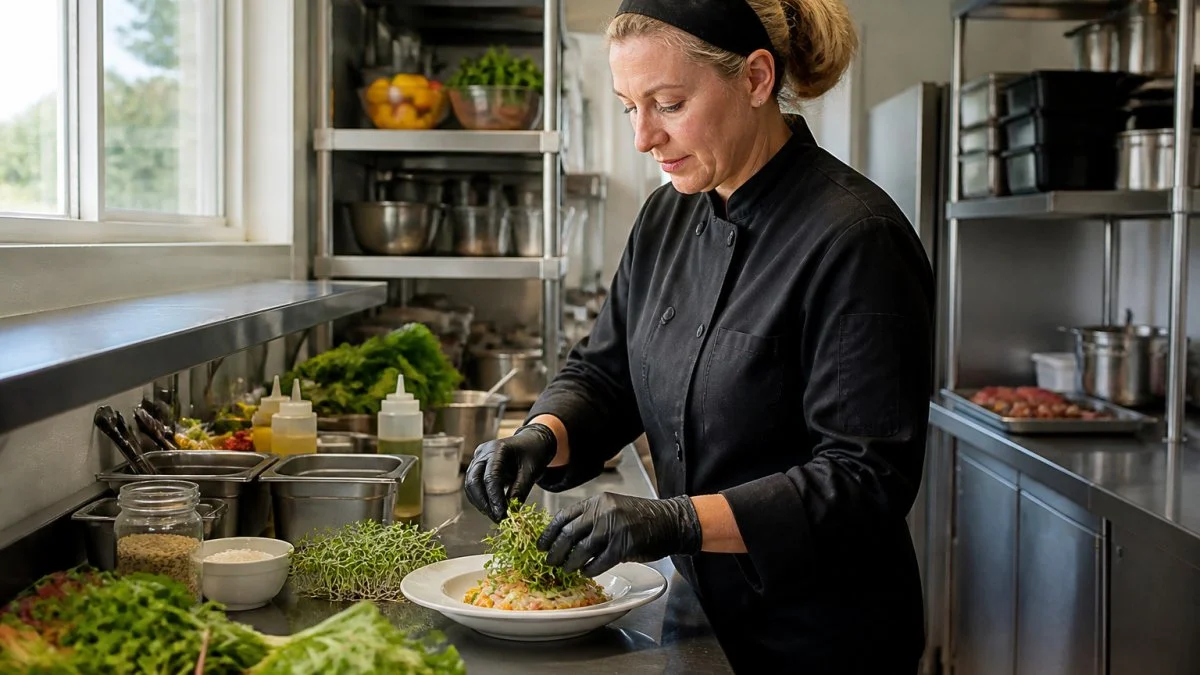
Our kitchen is dedicated to gluten-free and grain-free cooking. Everything we make is free from gluten, grains, soy, peanuts, tree nuts, and refined sugars.
We source ingredients from small farms in Central California.
Our menu clearly labels the top 14 allergens. Learn about Daré Vita Café’s allergen safety practices and dietary accommodations.
We offer dairy-free and vegan options for every meal. We make scratch-made meals.
Learn about Daré Vita Café’s allergen safety practices and dietary accommodations
Daré Vita Café implements comprehensive allergen safety measures across its operations.
| Safety Feature | Details |
|---|---|
| Kitchen Type | Dedicated gluten-free and grain-free cooking |
| Allergens Eliminated | Gluten, grains, soy, peanuts, tree nuts, refined sugars |
| Ingredient Sourcing | Small farms in Central California |
| Menu Labeling | Top 14 allergens clearly labeled |
| Dietary Options | Dairy-free and vegan options for every meal |
| Preparation Method | Scratch-made meals |
Plan Your Safe Dining Visit Today
Eating out with allergies doesn’t have to be stressful. When you choose restaurants with strict allergy protocols, you can relax and enjoy your meal.
Start by asking the questions outlined above about Las Vegas restaurants allergy protocols. Review Daré Vita Café’s gluten-free, grain-free menu options. Look for restaurants that answer confidently and specifically.
Review Daré Vita Café’s gluten-free, grain-free menu options
Contact Daré Vita Café for hours, directions, and menu questions
When you dine with us, you’re choosing a restaurant built on allergen safety.
Frequently Asked Questions
What questions should I ask a restaurant about food allergy safety?
Ask whether the kitchen has dedicated prep areas for allergen-free meals, whether ingredients are labeled with allergen information, and who you can speak with directly about your specific allergies. Request to know the source of ingredients. Ask to speak with a manager or chef if you have severe allergies.
Can restaurants actually prevent cross-contact with allergens?
Restaurants can significantly reduce cross-contact risk through dedicated equipment, separate prep areas, thorough hand-washing, and staff training. However, no restaurant can guarantee zero risk in a shared facility. A 2023 review found that 53.9% of food-allergy reactions in U.S. restaurants occurred despite staff being notified, showing that notification alone is insufficient. Restaurants with strict allergy protocols use multiple layers of protection, including separate utensils, cutting boards, and in some cases, entirely separate kitchens.
What should I include on a food allergy restaurant communication card?
Your card should list every allergen you need to avoid, written clearly and in large text. Include a statement like ‘I have a severe allergy and cross-contact can cause a serious reaction.’ Specify which foods trigger your reaction, any secondary allergies, and symptoms of an allergic reaction. Include your emergency contact and whether you carry an epinephrine auto-injector. Hand the card to your server and ask them to show it to the chef before your meal is prepared.
Why do nearly half of fatal food-allergy reactions happen at restaurants?
According to the CDC, nearly half of fatal food-allergy reactions over a 13-year period were caused by food from a restaurant or food-service establishment. This occurs because restaurants handle dozens of ingredients daily, employ multiple staff members, and face time pressure during service. Even with notification, mistakes happen. Restaurants with strict allergy protocols address this through dedicated equipment, separate kitchens, rigorous staff training, and clear communication systems that reduce, though cannot eliminate, the risk.
Dining out with allergies means finding restaurants that treat your safety as non-negotiable. Daré Vita Café is that place, a dedicated allergen-free kitchen with scratch-made meals, clear allergen labeling, and staff trained to keep you safe. Your allergies aren’t a limitation here. They’re our standard.