Table of Contents
Quick Summary
Anti-inflammatory meals are built around nutrient-dense foods such as colorful vegetables, berries, whole grains, fatty fish, olive oil, legumes and herbs, while limiting added sugar, refined carbohydrates and ultra-processed foods. Fill about half the plate with produce and treat this pattern as a healthy way to eat, not a guaranteed treatment for inflammation.
- Fill about half the plate with vegetables and fruit at lunch and dinner.
- Check the first ingredient on labels, since multigrain does not mean whole grain.
- Serve fatty fish like salmon or sardines two or three times a week.
- Rinse canned legumes to reduce added sodium.
- Talk with a doctor before changing your diet for a health condition.
Table of Contents
- What an Anti-Inflammatory Diet Actually Looks Like
- Anti-Inflammatory Meal Ingredients to Look For
- Finding Grain-Free Healthy Meals in Las Vegas
- Allergen-Friendly Restaurants in Las Vegas and What to Check
- A 21-Day Anti-Inflammatory Diet Menu Framework
- Budget, Heat, and Ordering Tips for Local Meal Planning
- Booking Your Next Allergen-Safe Meal at Daré Vita Café
- Frequently Asked Questions
What an Anti-Inflammatory Diet Actually Looks Like
Last Updated: November 8, 2026
Anti-inflammatory meals are built as a pattern, not a single food or a quick fix.
The U.S. An anti-inflammatory diet simply leans into that advice with a focus on foods rich in fiber, vitamin C, vitamin E and omega-3 fatty acids, as described in review on the role of foods in chronic anti- and pro-inflammatory processes.
Evidence is still developing, and results vary. Evidence on anti-inflammatory foods is still developing, and results vary from person to person. Treat an anti-inflammatory pattern as a healthy way to eat, not a guaranteed treatment for chronic inflammation.
- Build meals around vegetables, fruit, fish, and legumes
- Choose whole foods over ultra-processed options
- Limit added sugar and refined carbohydrates
- Talk with a doctor before changing your diet for a health condition
Anti-Inflammatory Meal Ingredients to Look For
Good anti-inflammatory meals start with ingredients you can recognize on the plate. Harvard’s diet review of the anti-inflammatory diet lists green leafy and dark yellow vegetables, whole grains, fruit, tea and coffee among the foods commonly included in this pattern. The practical skill is knowing which categories to build around, what each one contributes, and how to spot it on a menu or label.
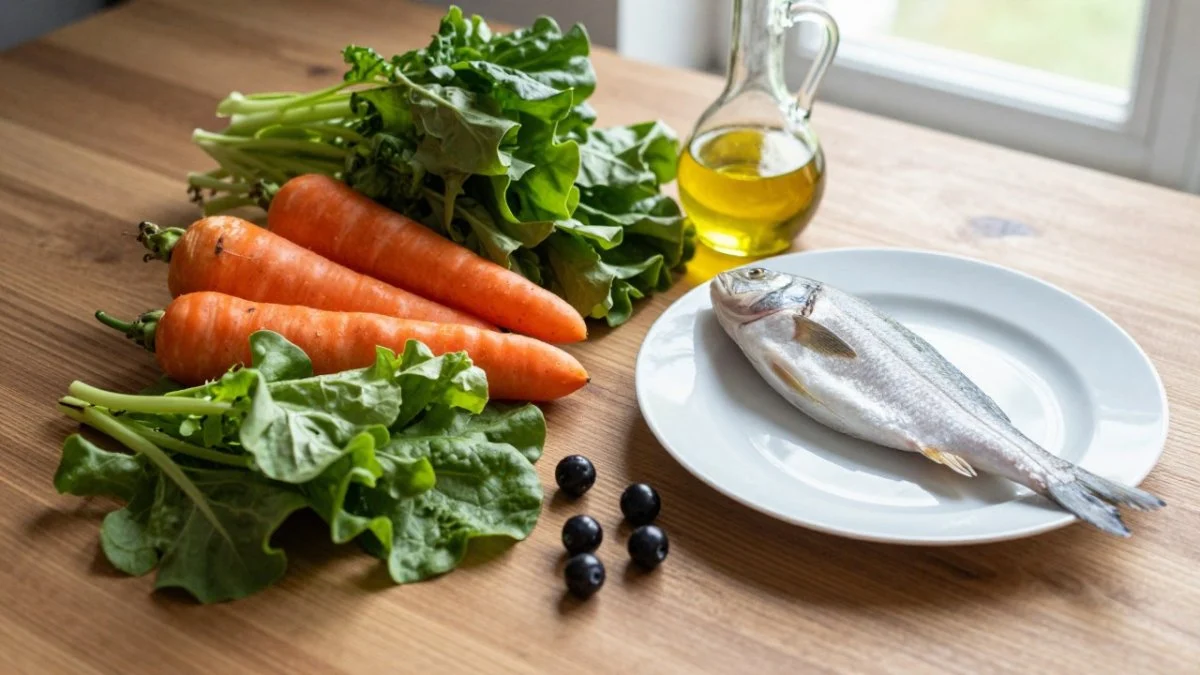
Colorful vegetables, leafy greens, and berries
Color is a useful shortcut. Dark leafy greens, orange and yellow vegetables, and berries bring fiber and antioxidants to a meal. Aim to fill roughly half the plate with produce at lunch and dinner, and rotate colors across the week rather than eating the same three vegetables every day.
- Spinach, kale, and collard greens for leafy volume and fiber
- Sweet potatoes, carrots, and squash for orange and yellow variety
- Blueberries, strawberries, and raspberries for fruit-based antioxidants
- Cruciferous options such as broccoli and cauliflower for texture and fiber
Whole grains and dietary fiber
Whole grains are a core part of most anti-inflammatory eating patterns because they supply fiber that supports digestive health and helps meals feel filling. Look for oats, brown rice, quinoa, barley, and whole-grain breads where the first ingredient is a whole grain. Fiber also slows digestion, which can steady energy across the afternoon.
Watch out: “multigrain” on a label does not mean whole grain, so check the ingredient list rather than the front-of-package wording.
Fatty fish, olive oil, nuts, and seeds
Healthy fats matter in this pattern. Fatty fish such as salmon, sardines, and mackerel supply omega-3 fatty acids, and olive oil and seeds add healthy fats to salads and sauces. A common pattern is to serve fish two or three times a week and to use olive oil in place of butter or creamy dressings.
Seeds such as pumpkin, sunflower, and chia are useful alternatives when tree nuts are off the table.
Legumes and plant-based protein
Legumes are one of the most cost-effective nutrient-dense foods available. Lentils, chickpeas, black beans, and split peas deliver protein and fiber together, which makes them useful for meatless meals that still satisfy. Canned versions are convenient; rinse them to reduce added sodium.
Herbs and spices
Herbs and spices add flavor without added sugar or heavy sodium, and they are an easy way to make simple meals taste finished. Garlic, ginger, turmeric, black pepper, oregano, and rosemary are common in this pattern. Use them generously in marinades, dressings, and roasted vegetable dishes.
What to limit or avoid
Just as important as what to add is what to cut back on. Limit added sugar, refined carbohydrates such as white bread and pastries, ultra-processed snack foods, and heavy fried foods. These tend to crowd out nutrient-dense options rather than complement them.
A quick plate checklist
- Half the plate: vegetables and fruit
- One quarter: whole grains or legumes
- One quarter: fish or other lean protein
- Fat: olive oil, seeds, or avocado
- Flavor: herbs and spices instead of sugar-heavy sauces
Use this checklist as a starting point, then adjust portions and categories for your own needs and any guidance from your doctor.
The article’s key ingredient categories and what each contributes can be scanned at a glance:
| Ingredient group | Main contribution | Practical note |
|---|---|---|
| Colorful vegetables and berries | Fiber and antioxidants | Fill about half the plate with produce |
| Whole grains | Fiber for digestion and fullness | Check the first ingredient on the label |
| Fatty fish, olive oil, seeds | Omega-3 fatty acids and healthy fats | Serve fish two or three times a week |
| Legumes | Protein and fiber together | Rinse canned versions to reduce sodium |
| Herbs and spices | Flavor without added sugar or sodium | Use generously in marinades and dressings |
Finding Grain-Free Healthy Meals in Las Vegas
Many people who avoid grains still want meals that feel satisfying. In Las Vegas, that often means looking beyond the usual menus. Plan ahead, read ingredient lists, and ask staff how dishes are prepared.
Grain-free does not have to mean bland. Vegetable-forward plates, legume-based soups and fish with roasted produce can all be filling. Look for restaurants that clearly list their ingredients and explain their kitchen practices. Daré Vita Café offers a gluten-free, grain-free menu you can review before you visit.
Allergen-Friendly Restaurants in Las Vegas and What to Check
Not every restaurant that says “allergy-friendly” handles allergens the same way. A restaurant worth trusting should answer your questions clearly. Ask how staff are trained, whether dishes are made in a dedicated space, and how they prevent cross-contact.
Before you order, check these points:
- Does the menu clearly label the top allergens?
- Can staff explain ingredients and preparation methods?
- Is there a separate prep area or cleaning process for allergen-free orders?
- Will the kitchen check your specific allergies before you arrive?
For a step-by-step method, see our guide to how to verify restaurant allergen safety. It explains what to ask and what answers should raise concern. You can also compare local options in our review of Las Vegas restaurants with strict allergy protocols.
A 21-Day Anti-Inflammatory Diet Menu Framework
A simple framework helps you eat well without planning every meal from scratch. Use this as a starting point, then adjust for your needs.
Daily structure:
- Breakfast: a vegetable scramble or fruit bowl with seeds
- Lunch: leafy greens, lean protein, and roasted vegetables
- Dinner: fish or legumes, olive oil, and a colorful side
- Snack: fresh fruit or a handful of seeds
Weekly steps:
- Pick three vegetables and two fruits to buy each week.
- Cook one protein in bulk for quick lunches.
- Prepare one soup or stew to reheat on busy days.
- Review what worked and swap in new ingredients.
Repeat this rhythm for 21 days, then adjust based on how you feel and what fits your routine.
Budget, Heat, and Ordering Tips for Local Meal Planning
Most anti-inflammatory guides stop at food lists. In Las Vegas, the practical questions are different: where to shop, how to keep food safe in desert heat, and how to order out without blowing a budget. This section covers the local logistics that general diet articles skip.
Budget-conscious meal planning
Legumes, whole grains, frozen produce, and canned fish are among the most affordable nutrient-dense staples, and they keep well in a Las Vegas pantry. A common pattern is to build two or three meals a week around lentils, chickpeas, or black beans, then round them out with seasonal vegetables and a whole grain.
- Buy dried or canned legumes in larger quantities and portion them out
- Choose frozen berries and vegetables when fresh prices rise out of season
- Cook one grain and one protein in bulk at the start of the week
- Freeze half of any soup or stew for a later week
Watch out: bulk buying only saves money if you can store and use the food before it spoils, so match quantities to your household size and freezer space.
Local sourcing and seasonal availability
Las Vegas-area farmers markets and produce stands are useful for seasonal shopping, and the desert climate shapes what is available when. Cooler months tend to bring leafy greens and root vegetables, while summer heat favors heat-tolerant options and makes cold storage more important. Ask vendors what was picked recently and how to store it, since desert temperature swings affect shelf life.
Heat and food safety
Las Vegas heat affects food safety, so plan carefully. Keep cold items chilled during travel, and avoid leaving prepared meals in a hot car. Use insulated bags with ice packs for grocery runs and takeout, and move perishables to the refrigerator promptly. Choose fresh produce you can use within a few days, or freeze what you will not finish.
Ordering out on a budget
When ordering out, ask whether a dish can be prepared without ingredients you need to avoid. Clear requests reduce mistakes and waste. Look for restaurants that list ingredients and preparation methods, and favor dishes built around vegetables, legumes, or fish rather than fried or sugar-heavy options. Ordering a base dish and adding a side of vegetables is often cheaper than a specialty entree.
- Ask for dressings and sauces on the side to control portions
- Choose grilled, roasted, or steamed preparations over fried
- Confirm whether a dish can be made without ingredients you avoid
- Check the menu online before you go to compare options and prices
A simple weekly rhythm
- Plan three dinners around legumes or fish and two around poultry or other lean protein.
- Shop once for produce and once for pantry staples to reduce trips in the heat.
- Batch-cook one grain, one protein, and one soup or stew.
- Keep frozen produce and canned fish on hand for busy days.
- Review what you actually used and adjust the next week’s list.
This rhythm keeps costs predictable and reduces the chance that food spoils before you use it.
Booking Your Next Allergen-Safe Meal at Daré Vita Café
If you want a dining option built around allergen safety, Daré Vita Café focuses on scratch-made meals free from gluten, grains, soy, peanuts, tree nuts and refined sugars.
Review the full gluten-free and grain-free menu before your visit. When you are ready to plan your meal, contact Daré Vita Café for hours, directions and questions about your allergies.
Ready to eat with confidence? Order online from Daré Vita Café and enjoy nutrient-rich meals made with your allergies in mind.
Frequently Asked Questions
What is the best meal for an anti-inflammatory diet?
A strong anti-inflammatory meal combines a lean or fatty protein such as fish or legumes, a generous portion of colorful vegetables, and a healthy fat such as olive oil or avocado. The Harvard T.H. Chan School of Public Health describes anti-inflammatory eating as a varied pattern rich in vegetables, fruit, healthy oils, nuts, and seeds rather than a single food. Look for meals built on whole, minimally processed ingredients, and check that the plate includes produce at every meal.
Can I find grain-free anti-inflammatory meals in Las Vegas?
Yes, but grain-free options are not common at most restaurants, so it helps to check menus and ask staff directly about ingredients and preparation. Daré Vita Café is an allergen-friendly dining destination in Las Vegas that prepares scratch-made meals free from gluten, grains, soy, peanuts, tree nuts, and refined sugars. Pricing depends on order size and timing, so check the Daré Vita Café website for current prices or a quote.
How can I check whether a restaurant meal fits an anti-inflammatory eating pattern?
Look at the ingredient list for whole foods such as vegetables, fruit, fish, legumes, nuts, and seeds, and for cooking oils such as olive oil instead of refined oils. Ask whether dishes are made from scratch and whether the top allergens are clearly labeled. Evidence on anti-inflammatory foods is limited and varies across people, so a single meal cannot guarantee a specific health outcome.
Are there allergen-friendly restaurants in Las Vegas with anti-inflammatory options?
Allergen-friendly dining in Las Vegas is most reliable when a restaurant labels its menu clearly and trains its staff on cross-contamination. Ask about a dedicated preparation area and whether the kitchen can accommodate your specific allergies before you visit. Daré Vita Café offers dairy-free and vegan options for every meal and excludes seed oils, corn, soy, peanuts, and tree nuts.